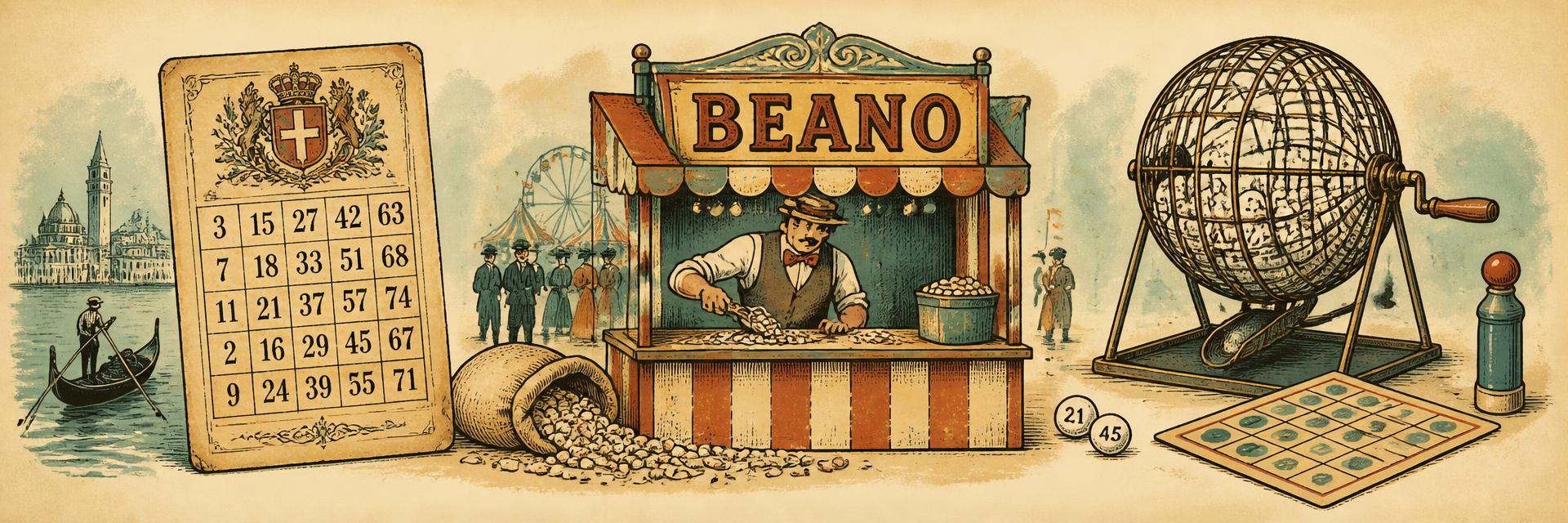
- 1530sItaly's Lo Giuoco del Lotto d'Italia begins — bingo's oldest ancestor.
- 1770sFrench upper classes play Le Lotto with numbered cards and tokens.
- 1800sGerman schools use lotto games to teach spelling and arithmetic.
- 1920sBeano sweeps American carnivals — players cover numbers with beans.
- 1929Edwin S. Lowe renames the game Bingo and hires Carl Leffler to design cards.
- 1930sChurches adopt bingo for fundraising; it spreads across North America.
Italian Beginnings
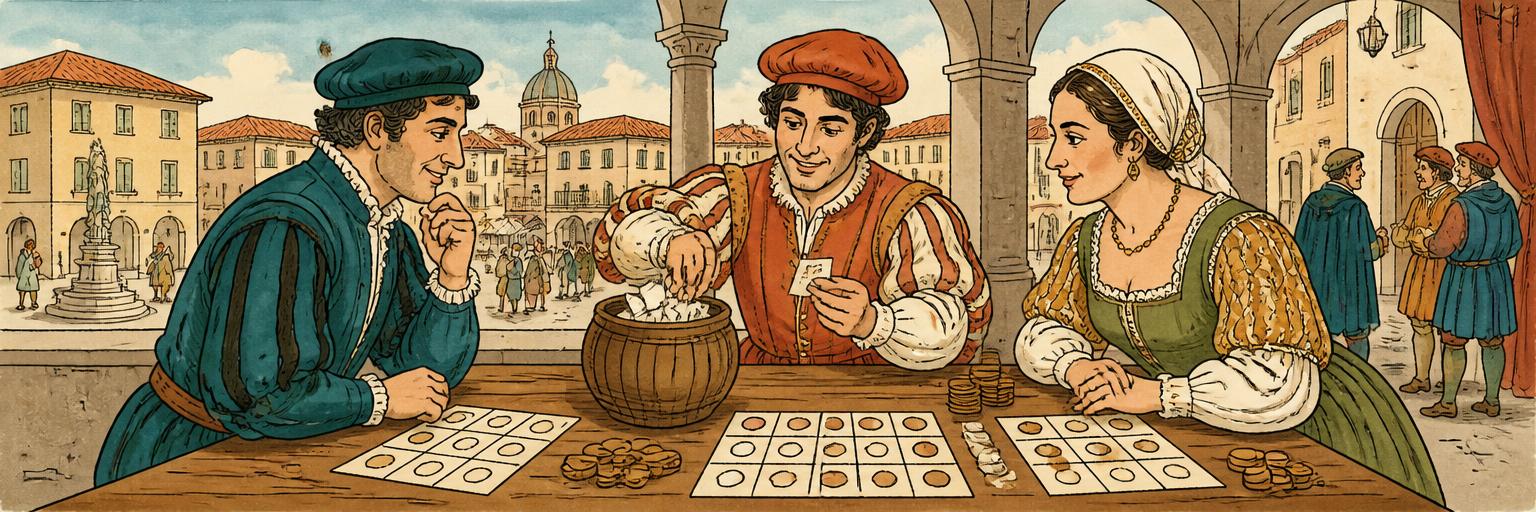
Bingo's oldest known ancestor is the Italian national lottery, Lo Giuoco del Lotto d'Italia, which began around 1530. Players matched numbers drawn at random against numbers on their cards — the same core idea bingo uses today. Remarkably, a version of that lottery is still played in Italy every week.
France and Germany
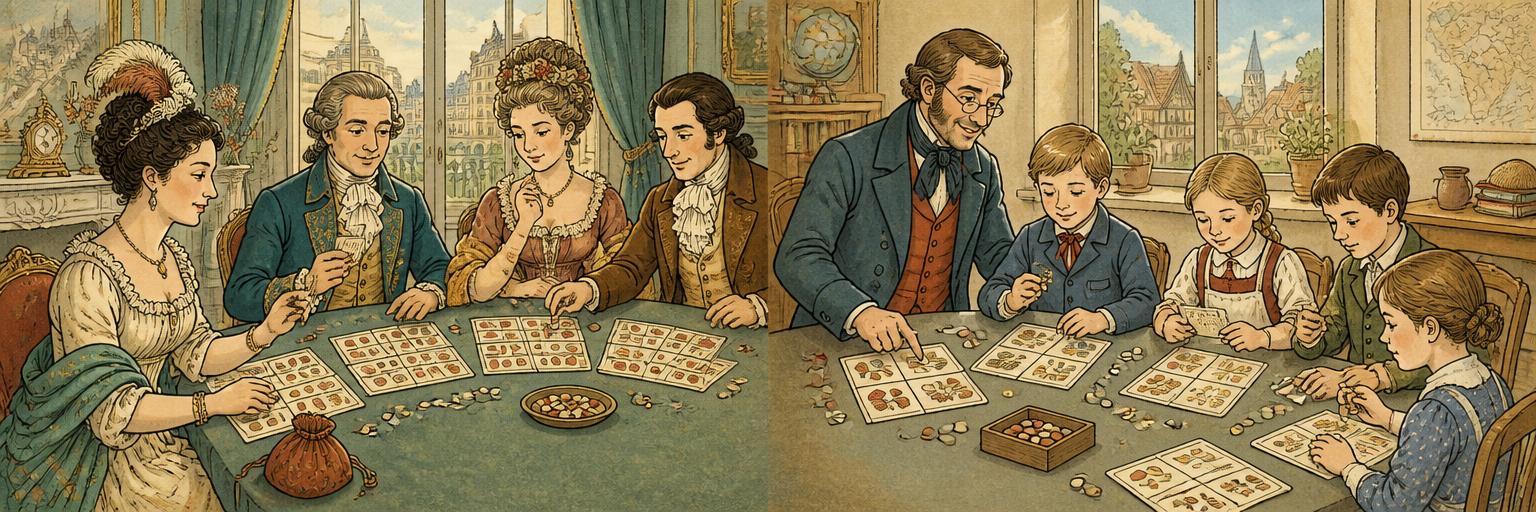
By the 1770s the game had traveled to France, where the upper classes played a version called Le Lotto with cards divided into rows and columns of numbers, covered with tokens as numbers were called. In the 1800s, German educators adopted lotto-style games as teaching tools, using them to drill children on spelling, animals, and multiplication tables — the first classroom bingo, centuries before the name existed.
Beano Comes to America
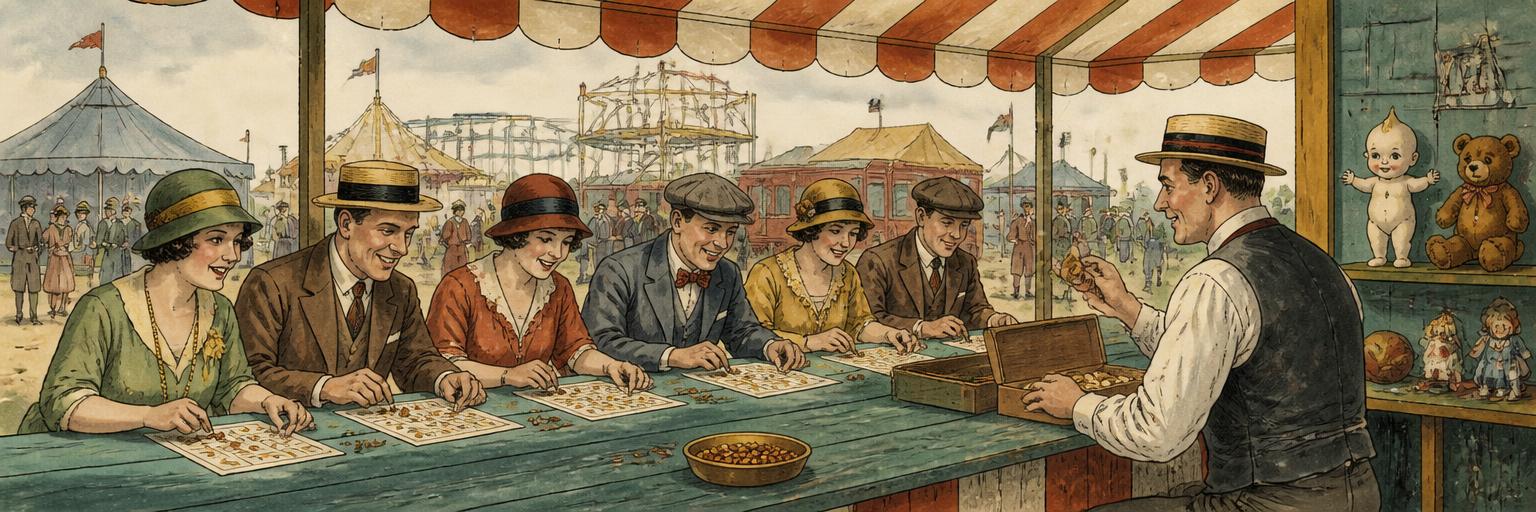
The game crossed the Atlantic in the 1920s and became a carnival staple under the name Beano. A caller drew numbered discs from a cigar box, and players covered their cards with dried beans. A full row meant a shout of “Beano!” and a small prize, usually a kewpie doll.
Edwin S. Lowe and the Name “Bingo”
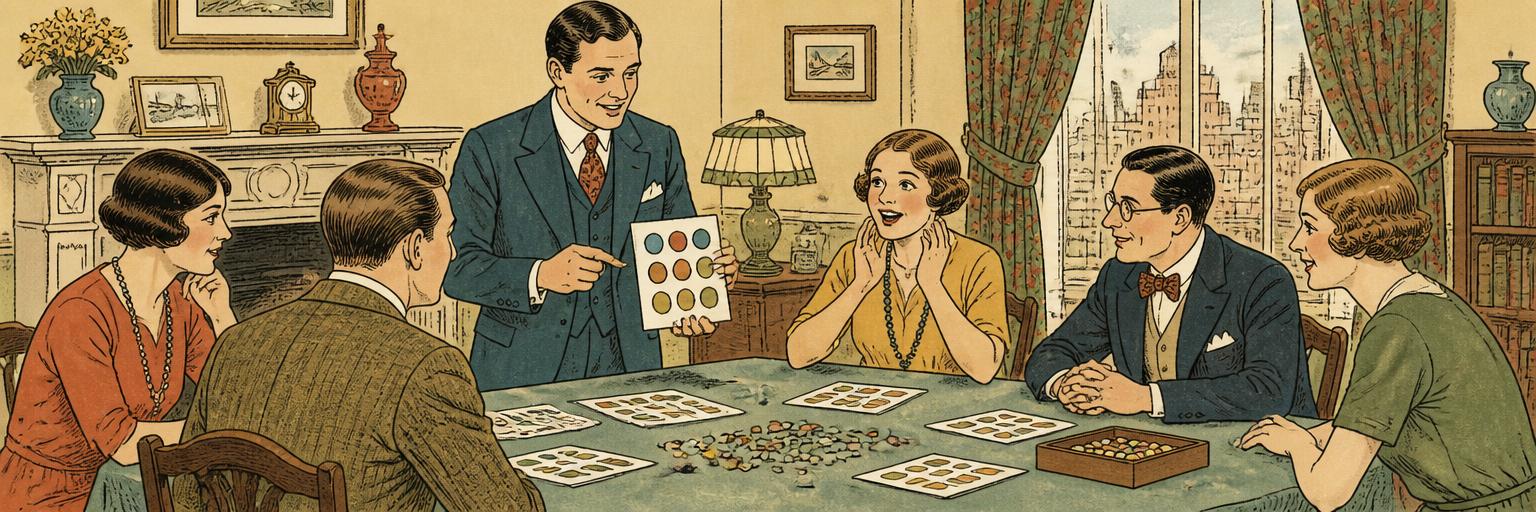
In December 1929, a New York toy salesman named Edwin S. Lowe stopped at a traveling carnival outside Jacksonville, Georgia, and watched a packed tent of Beano players who refused to leave at closing time. Lowe took the idea home, hosted games for friends, and — as the story goes — one excited winner yelled “Bingo!” instead of “Beano!” The name stuck.
To sell the game commercially, Lowe needed cards that rarely produced duplicate winners. He hired Columbia University math professor Carl Leffler, who developed some 6,000 unique card combinations — a famously demanding task for the pre-computer era.
Church Halls and Community Bingo
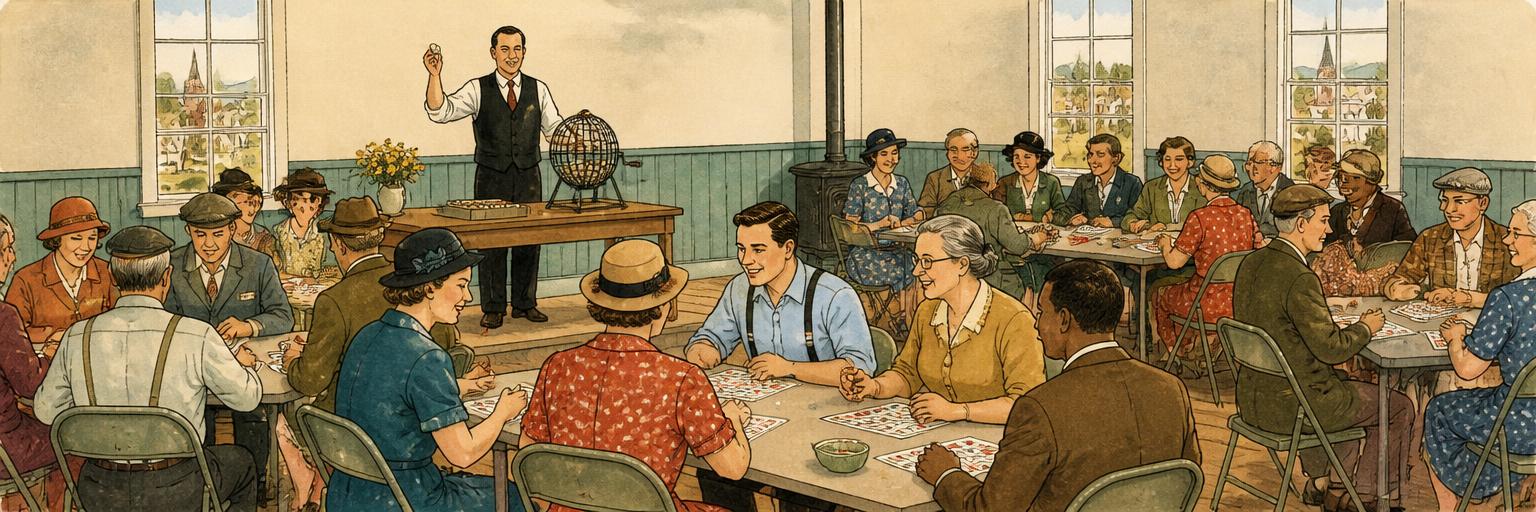
Bingo's biggest boost came when a Catholic priest in Pennsylvania began using it to raise funds for his church, and wrote to Lowe about the game's growing popularity. Through the 1930s and 1940s, bingo nights spread to churches, fire halls, and community centers across North America, where they remain a fundraising tradition today.
Bingo Today
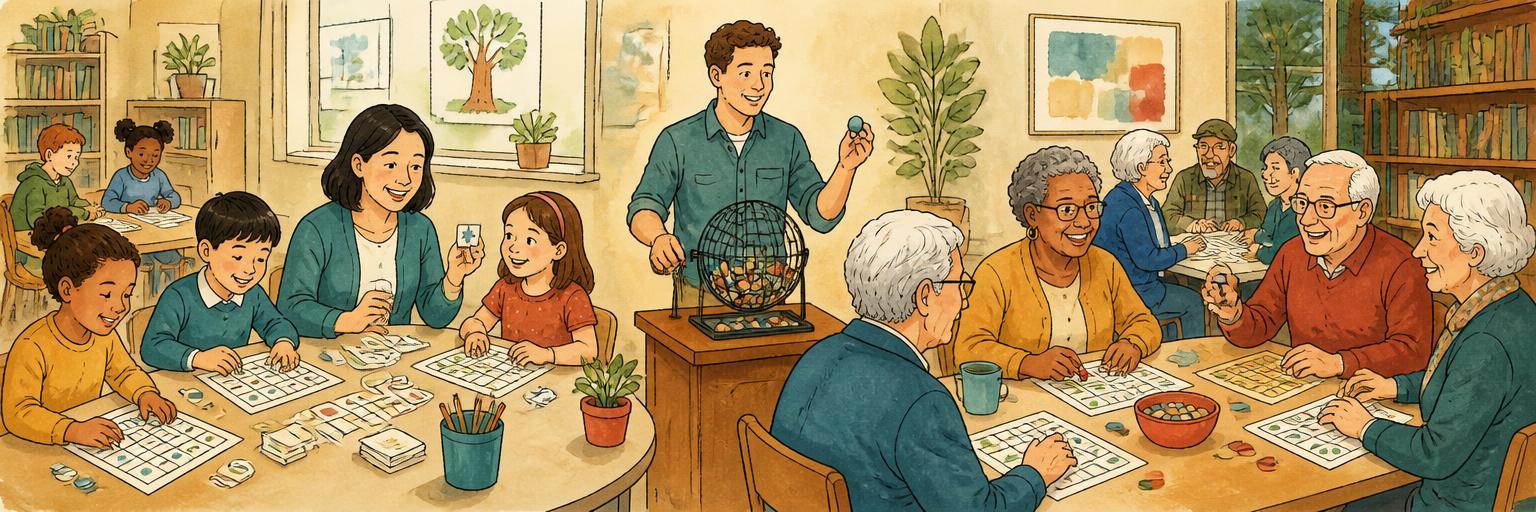
Modern bingo lives several lives at once: numbered bingo in halls and senior centers, online bingo on screens, and word bingo in classrooms — the direct descendant of those 1800s German teaching games. Teachers now swap numbers for sight words, vocabulary, or math facts, and the five-hundred-year-old mechanic of “hear it, find it, cover it” still works exactly as it always has.
Try It Yourself
Make your own piece of bingo history: create free printable bingo cards in seconds, call a game with the online bingo caller, learn how to play, or mix things up with bingo game variations.